
Throughout 2026, the majority of Solana DEX activity occurs without manual intervention. Automated systems monitor token listings, analyze liquidity pool modifications, identify arbitrage opportunities, and execute transactions within milliseconds. The ecosystem is fast, intensely competitive, and continuously evolving in sophistication.
Here's the critical insight many traders overlook: merely deploying a trading bot provides no competitive advantage. What determines success is architectural quality and underlying infrastructure. You can implement optimal trading logic, but if your system relies on congested infrastructure or receives delayed market data, it will consistently fail to capture opportunities.
This guide examines the bot categories dominating Solana trading in 2026—from launch snipers and cross-DEX arbitrage to execution tools like TWAP algorithms.
Let's dive into the technical architecture.
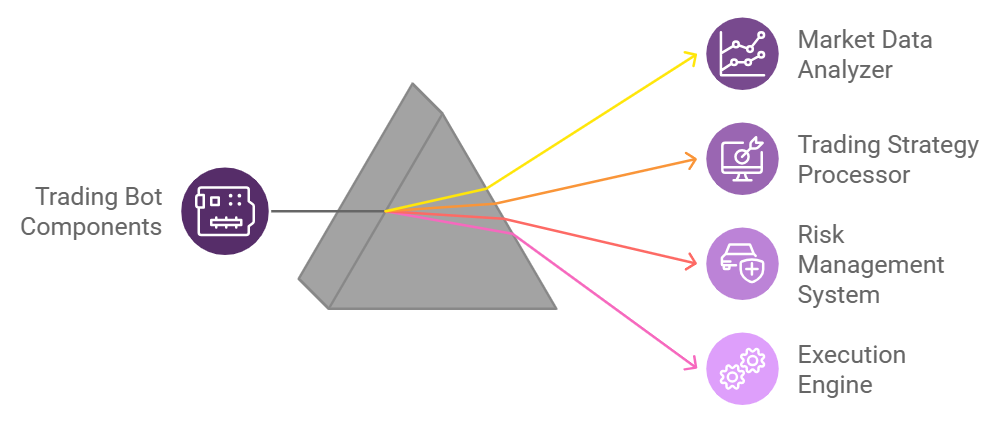
Fundamentally, these systems are automated programs monitoring blockchain state, detecting specific trigger conditions (such as new pool deployment or price inefficiencies), and executing predefined actions (like swap transactions or order book modifications). The logic ranges from straightforward to complex, but reaction latency and execution reliability ultimately determine outcomes.
These systems are engineered to acquire tokens immediately upon tradability, typically concurrent with initial liquidity provision. They monitor for specific instruction events like InitializePool or AddLiquidity on AMM program accounts (such as Raydium or Orca). Upon detection, they broadcast swap transactions instantly, targeting entry before price appreciation.
High-performance sniper implementations don't merely react quickly—they:
If you're querying public RPC endpoints with multi-second polling intervals, you're not competing—you're spectating as others capture opportunities.
For comprehensive coverage of sniper bot architecture specifically, we've published detailed analysis elsewhere, including construction and optimization methodologies for real-time token launch scenarios.
Read the complete sniper bot guide →
These bots identify price discrepancies across decentralized exchanges—for example, SOL/USDC trading at $121 on Orca versus $121.80 on Raydium. The system purchases on the undervalued venue and sells on the overvalued one, ideally within a single atomic transaction.
The challenge? Price inefficiencies resolve rapidly. When market conditions shift, every arbitrage system detects it simultaneously, and execution speed determines profitability.
Competitive requirements include:
Modern implementations frequently simulate trades pre-execution (via simulateTransaction) to avoid wasting gas on unprofitable routes.
On Solana's order book exchanges like OpenBook or Phoenix, certain automated systems place simultaneous buy and sell orders near current market pricing, continuously adjusting positions. Their objective is capturing bid-ask spread while managing inventory exposure.
These systems require:
The distinction between profitable market-making operations and capital-bleeding ones often comes down to quote-cancellation speed.
Unlike systems racing for earliest slot inclusion, these bots partition large orders into smaller increments and execute across extended timeframes.
A TWAP implementation might divide a 100,000 USDC purchase into 100 segments distributed over one hour. The goal: minimize market impact and slippage.
Effective implementation demands:
Most implementations still leverage routing aggregators like Jupiter for optimal path finding, but execution logic (timing, sizing, pacing) is managed programmatically off-chain.
Regardless of bot category, the fundamental principle remains constant: speed, data quality, and infrastructure reliability define results.
Before architecting your own system, understanding existing solutions provides valuable context. Most contemporary bots promise rapid execution and seamless sniping—and function adequately during low-competition periods.
However, when genuine competition materializes, their constraints become apparent: shared RPC infrastructure, no validator proximity, no slot synchronization. You're fast—but insufficiently fast.
Here's an analysis of prominent Solana bots in 2026.
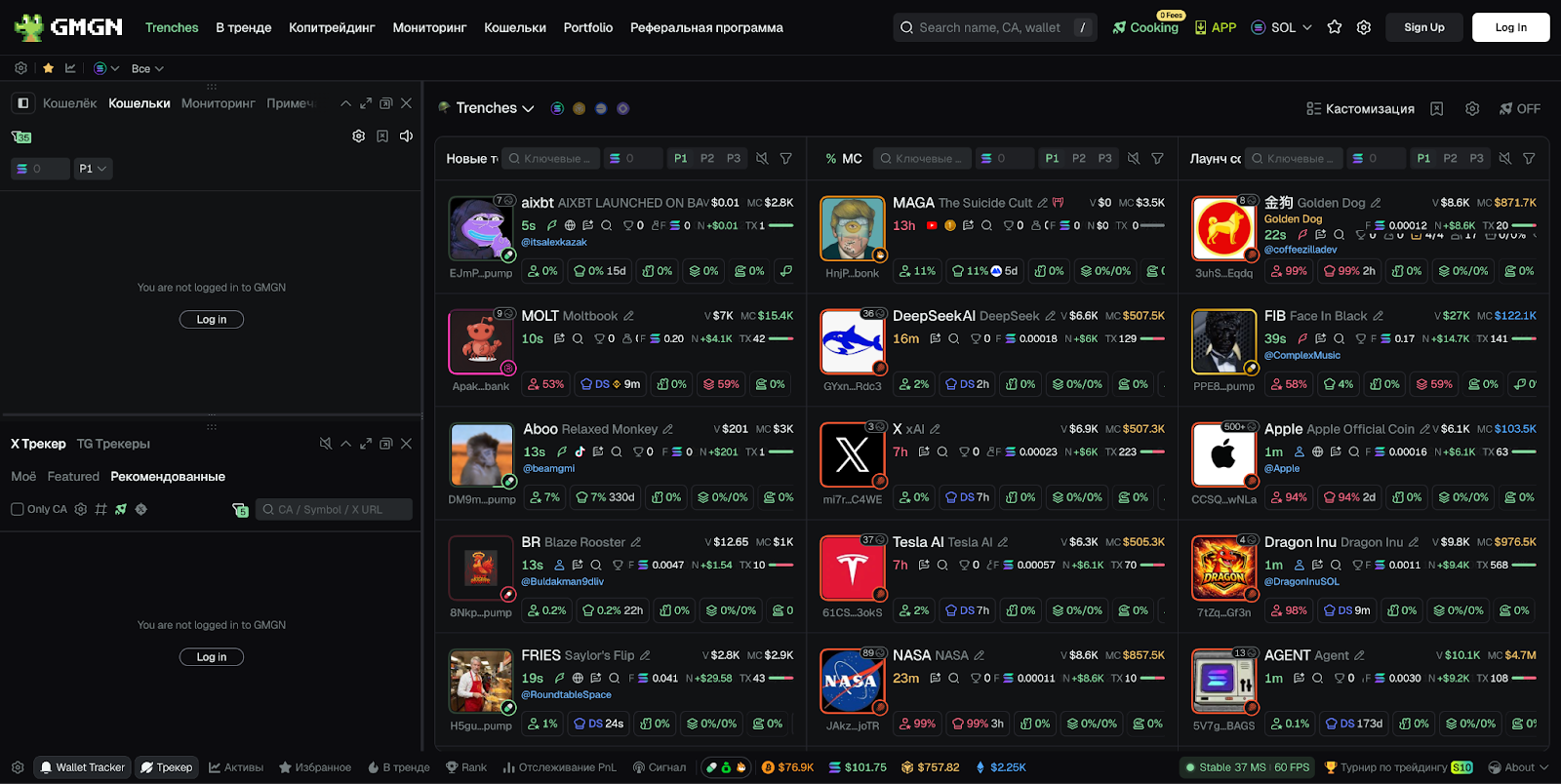
GMGN appears frequently in sniper discussions. It's polished, Telegram-integrated, and built around AI-driven trigger logic. You configure aggression parameters, and it hunts emerging tokens based on liquidity and volume metrics. For meme coin sniping and volatility chasing, it functions—within limits.
The core limitation? Continued reliance on public RPC infrastructure. During actual network load—like Raydium token launches or Jupiter volume spikes—GMGN frequently observes market movements with critical delay. In Solana's temporal reality, "slight delay" translates to 3x price appreciation. The logic may be sophisticated, but the data pipeline is saturated. No private relay infrastructure, no validator awareness, no ShredStream integration.
It serves casual use cases adequately, but for professional-grade bot competition, GMGN functions more as market observer than execution system.
BullX markets itself as comprehensive platform: sniping, wallet monitoring, alerts, trend analysis, even whale tracking. It supports Solana, Ethereum, and BNB, appearing attractive in principle. You access a "Pump Vision Terminal" and configure sniper triggers within minutes.
However, broad feature scope introduces tradeoffs: execution latency. BullX wasn't architected for speed—it was designed for coverage. It handles numerous functions moderately well, but nothing approaching the precision required for high-frequency trading operations.
For Solana specifically, it fails to leverage native infrastructure advantages. No dedicated RPC, no slot synchronization, no optimized fee routing. The sniper functionality might succeed during quiet launches, but under high-congestion conditions, it consistently trails competition.
It's appropriate for multi-chain trend followers or passive position holders. Not the tool for millisecond-critical operations.
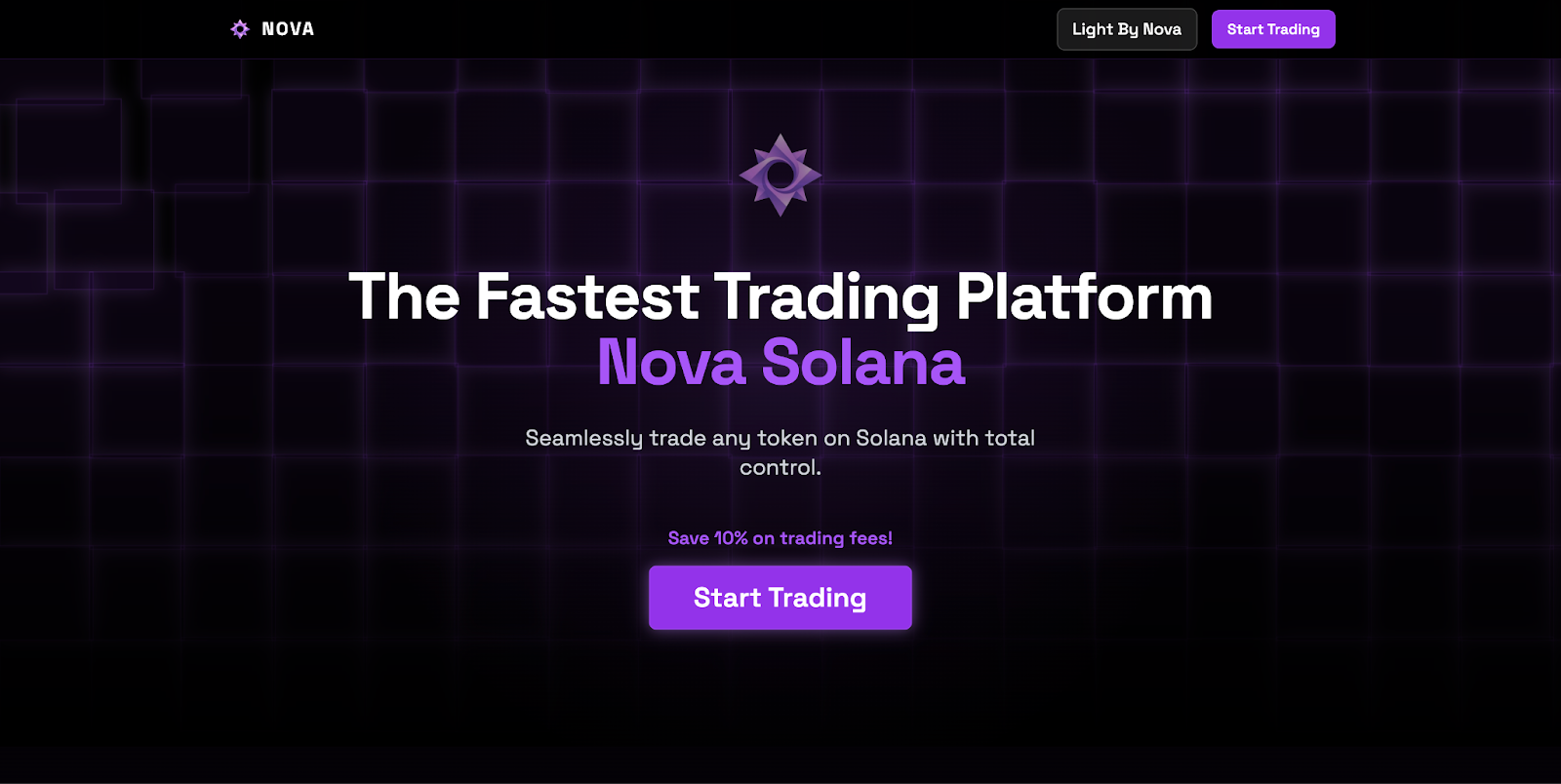
NOVA's primary advantage is execution speed without unnecessary complexity. It operates entirely through Telegram, offers reasonable automation configuration, and avoids overwhelming users with dashboard complexity. You get sniper mode, wallet management, and fundamental execution logic—all rapidly deployable.
The execution engine demonstrates above-average performance. Some users report NOVA achieves early buy executions more consistently than larger platforms. This may result from leaner codebase, fewer background processes, or simply cleaner Solana integration. However, the same ceiling applies: infrastructure remains public.
You lack access to priority fee optimization, can't integrate ShredStream, and aren't routing directly to validator endpoints. It's a responsive bot, but lacks the fastlane. For its simplicity, it ranks among better options available, but limitations emerge under pressure.
Axiom prioritizes user control and security. It's non-custodial, provides trading rewards, and enables direct wallet connections via browser. The interface is refined, and one-click strategies are beginner-accessible.
However, speed was never the design objective. It doesn't offer instant snipe functionality, doesn't integrate with relay networks, and wasn't architected for reacting to micro-movements or slot-level trading. It's secure, measured, and suitable for treasury management or DCA strategies, not speed-competitive trading.
Axiom makes sense for long-term holders or DAO treasury operations. Just not for bots requiring real-time competitive execution.
Photon reduces features to essentials. You get a minimal Solana-exclusive bot with web interface, portfolio visualization, and basic execution tools. No Telegram integration, no AI, no alerts—just clean interface enabling token swaps or DCA without friction.
It's likely the most beginner-friendly option on this list, but also the least adaptable. There's no automation in the trading sense, minimal customization capability, and no access to Solana's advanced data infrastructure.
If you're new to Solana and prefer something resembling a mobile app over terminal windows, Photon delivers. But for anything beyond basic interaction, it rapidly reaches functional limits.
Most turnkey bots prioritize simplicity and convenience. That's acceptable for casual usage, but when network congestion increases, they begin missing trades consistently.
Ultimately, it's not about possessing "secret strategies." What determines outcomes is how your bot connects to the network, data feed latency, and transaction submission reliability.
So let's transition to practical implementation: architecting your own Solana bot with enhanced control, superior speed, and more reliable execution.
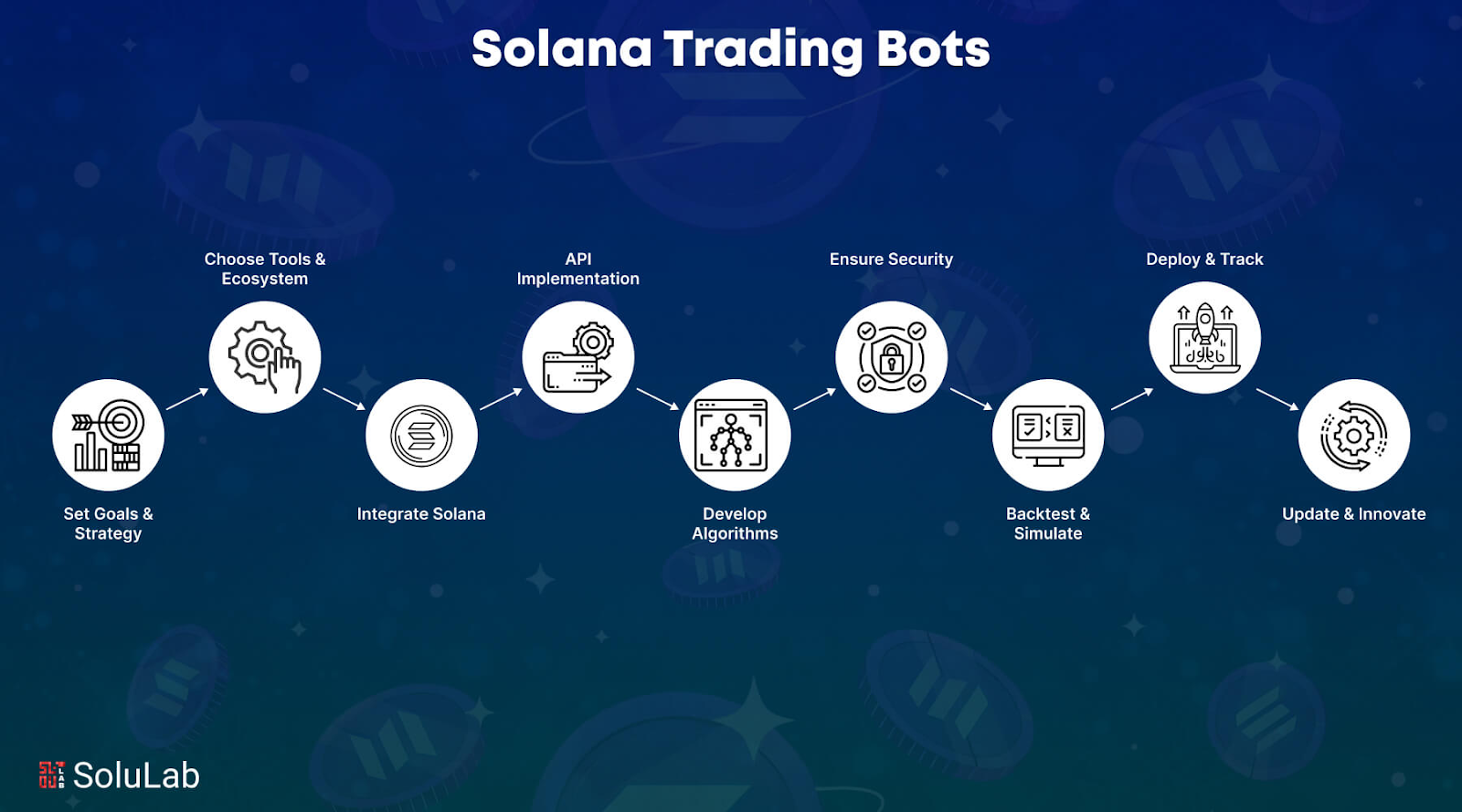
Not all bots serve identical purposes. Before writing code, clearly define your objective:
Logic, tooling, and infrastructure requirements all depend on this decision. Don't attempt building an "omnibus" bot. Start with focused scope.
Most Solana bots in 2026 utilize TypeScript or Rust. TypeScript offers lower barrier to entry—leveraging libraries like @solana/web3.js, Jito-ts, and Shyft.
Rust provides superior low-level control and performance, particularly beneficial for validator-adjacent bots or scenarios demanding complete memory and latency control.
For balanced approach, many implement TypeScript for bot logic while connecting to high-performance Rust-based backends or infrastructure.
You'll also require:
This is where most bot implementations fail fundamentally.
If your bot reads pool modifications, swap instructions, or token listings from public RPC endpoints, you've already lost. You're experiencing filtering, rate limiting, and de-prioritization during congestion.
To compete, deploy dedicated RPC infrastructure—optimized for low-latency access with slot synchronization, Geyser plugins, and ideally validator co-location. This proves especially critical for sniper and arbitrage implementations. For teams serious about competitive execution, providers like RPC Fast offer dedicated Solana nodes engineered specifically for trading bot infrastructure with guaranteed latency SLOs. Teams not yet ready for dedicated infrastructure can start on RPC Fast's self-serve Solana SaaS API instead — a free Start plan with no card required, upgrading to Aperture ($499/mo) or a dedicated node as trading volume grows.
Critical RPC features to implement:
Forget 500ms polling intervals. Your bot requires subscription to relevant data streams and immediate action upon event occurrence.
For example:
Maintain asynchronous and batched processing—don't block on-chain reactions with supplementary logic or database writes.
A performant bot isn't merely about rapid transaction transmission—it's about targeting the correct slot at optimal timing.
Solana operates on continuous slot stream (~400ms intervals), and during congestion, only transactions with appropriate priority fee and timing combinations achieve inclusion.
You'll want to:
This is where operating on validator-level infrastructure provides competitive advantage. You access actual timing and propagation paths, not the delayed perspective from public nodes.
Every trade your bot transmits should follow this cycle:
priority_fee_lamports if necessaryYou can leverage batching (e.g., Jupiter's computeBudgetProgram) to pack more instructions into individual slots. Always log responses with confirmations, slot numbers, and error status.
Don't treat your bot as opaque system. Implement basic observability:
This enables logic tuning, early RPC issue detection, and prevents silent failures.
Solana's devnet suffices for syntax validation, but not behavioral testing.
To properly test your bot:
Bots functioning perfectly in isolation frequently fail under real speed stress. Always validate in production-like environments.
Solana trading in 2026 no longer rewards best strategies—it rewards fastest execution.
If you're serious about building bots capable of competing during peak network activity, infrastructure determines everything. From real-time data streams to slot-aware execution, the infrastructure behind your code matters more than ever.
At Dysnix, we've helped numerous trading operations architect and deploy bot infrastructure that performs where it counts—with clean latency metrics, proper slot synchronization, and full control over execution timing. For the critical RPC layer underpinning competitive bot operations, we work with infrastructure providers like RPC Fast who deliver dedicated Solana environments engineered specifically for trading automation.
Ready to architect production-grade bot infrastructure? RPC Fast provides the dedicated Solana nodes and validator proximity your trading systems need to compete at millisecond precision — or start free on the Solana SaaS API and scale up to a dedicated node as your bot proves itself.

Build faster with private RPC by Dysnix
Dedicated endpoints, gRPC, and raw streams for trading, AI agents, and dApps.
Test for free



.jpeg)


